dryad
Identify Flora Problem Green Space The Land How It Works Treasury Costs Scale V2 AI Footprint Dashboard
See what Dryad looks like in Year 3 (2029)
A mockup of the fully operational system

The Forest
That Owns
Itself

An autonomous AI agent managing native habitat restoration on 9 vacant lots in Detroit — funded by DeFi yield, verified by community science, recorded onchain.

AGENT: dryadforest.eth // ERC-8004 #35293 // Base L2 WALLET: 0xf2f7…0880 // ETH + wstETH + USDC + DIEM GPS: 42.3417° N, 83.1001° W // 25th St, Detroit LOOP: 24h cycle // iNaturalist → detect → hire → verify → pay → record
Ask Dryad Autonomous agent
LIVE

The Problem

Detroit's Vacant Land Crisis

Detroit has 100,000+ vacant lots — 18 square miles of empty land. Who holds them: DLBA 59,617 lots (down from 67K in 2016, having sold 28,801), City P&DD 5,381 lots, private owners 41,685 lots. The city pays $13.44/lot × 5 cuts/year = $6.72M annually just mowing. Each lot generates only ~$30/year in property tax. Meanwhile, Tree of Heaven and Japanese Knotweed colonize unchecked.

Management doesn't scale. The DLBA's city subsidy was cut from $10.5M to $0 in FY2025. Only 20% of Detroit's parkland is classified as "natural areas" (vs. 57% national median), and 19% of the city's tree canopy sits over unprotected vacant land. When government funding is unreliable, an autonomous agent with its own DeFi treasury is more resilient.

Sources: DFC, "Saving for the Future" (2025), DLBA Q2 FY25 Report

A Green Space Equity Emergency

Only 6% of Detroit's land is dedicated to parks and recreation — vs. a 15% national median. 87% of Detroit buildings are more than a quarter-mile from a park. The communities with the highest social vulnerability scores have the least green space access.

86% of Detroit neighborhoods experience temperatures 8°F+ higher than surrounding rural areas. Roughly 3,160 residents live in intra-urban heat islands 10°F+ hotter than nearby areas — and more people of color and people in poverty live in the hottest neighborhoods. Suburban neighbors have 30% more tree canopy — a legacy of white flight.

Sources: Planet Detroit (2025), Michigan Tech / Urban Forestry & Urban Greening (2025)

The Demolition is Over. Detroit spent $456 million demolishing 27,000 abandoned homes since 2014. Only 942 structures remain in the DLBA inventory. The question now: what do you do with 122,929 empty lots?
Detroit GreenSpace Conservancy: Detroit Future City's October 2025 report "Saving for the Future" calls for a dedicated land conservancy for Detroit — focusing on natural areas (forests, prairies, wetlands) that provide greater ecological services and cost less than traditional parks. Draft mission: create and protect landscapes for a more sustainable, equitable, and climate-resilient city. Dryad is building the autonomous operational layer.
The Science of Greening Vacant Lots
63% reduction in poor mental health near greened lots. 40% reduction in violent crime (Flint, MI study). 76% increase in outdoor recreation. Property values recover up to 19% in high-vacancy neighborhoods. Tree canopies reduce pedestrian temperatures by up to 21°F.
Ecological Services at Scale
U.S. urban trees store 700M tonnes of carbon ($14.3B value), remove 711,000 metric tons of air pollution/year ($3.8B), and avoid 110 billion gallons of stormwater runoff annually. Philadelphia's green infrastructure NPV: $1.94–4.45 billion over 40 years. Every $1 in street trees returns $3.

Dryad's Solution

An autonomous AI agent running 24/7: receiving biodiversity data from community volunteers, detecting invasive species, hiring contractors, verifying their work via GPS-tagged photos, paying them in USDC, and recording every milestone onchain.

Self-sustaining: Lido stETH yield → DIEMVenice inference → property taxes → contractors. The loop funds itself from DeFi yield without touching principal.

Why Autonomy Matters

Most urban greening programs fail when funding cycles end — lots revert to neglect within 2–3 years. Community-led maintenance outperforms municipal-only approaches by in crime reduction, but requires sustained coordination that volunteer energy alone can't guarantee.

Dryad solves both problems: an agent that never stops, funded by a treasury that never depends on annual budgets, verifying impact through community science (iNaturalist) rather than self-reporting.

Why Urban Green Space Matters

The science is clear: green spaces deliver massive, quantifiable returns. These aren't aspirational goals — they're measured outcomes from cities like Detroit, Philadelphia, and Flint.

8–20%

Property value increase near green spaces. In high-vacancy neighborhoods, greening lots recovers up to 19% of surrounding home values.

40%

Reduction in violent crime near greened vacant lots — from a University of Michigan study in Flint, MI.

63%

Reduction in poor mental health near greened lots. Plus a 76% increase in outdoor recreation. (Philadelphia study)

$3

Return per $1 invested in street trees — through energy savings, stormwater capture, air quality, and property value uplift.

68%

More species movement through connected habitat vs. isolated patches. Dryad's 9 contiguous lots form a biodiversity corridor.

21°F

Temperature reduction under tree canopy. Critical in Detroit, where 86% of neighborhoods run 8°F+ hotter than rural areas.

The Biodiversity Multiplier

Each restored lot triggers a compounding cycle: native plants attract pollinators → pollinators increase seed dispersal → more native plants establish → habitat expands. 87 of the world's leading food crops depend on pollinators. Global welfare loss from pollinator decline is projected at $729 billion/year. Every lot matters.

The Invasive Cascade

Unchecked, a single Tree of Heaven (300,000 seeds/year, allelopathic soil toxins) becomes a seed source for surrounding blocks and a spotted lanternfly breeding ground — now confirmed in Wayne County. Invasive monocultures collapse pollinator habitat, degrade soil, increase stormwater runoff, and cost $26 billion/year in North America alone. Early detection is the cheapest intervention.

Sources: UMich SPH, Planet Detroit, USDA Forest Service, Nature Communications, ScienceDirect, Michigan Invasive Species Program. Full citations in project documentation.

System Architecture

A mycelial network of autonomous services — the agent at the center, connecting ecological data, onchain contracts, treasury, and community.

inference milestones observations emails acquire yield USDC hire verify proof DRYAD AGENT (elizaOS) Venice.ai LLM GLM 4.7 Flash inference Base L2 Contracts Milestones.sol ERC-8004 #35293 iNaturalist species data community science AgentMail dryad@agentmail.to email + alerts DLBA lot acquisition buildingdetroit.org Treasury dryadforest.eth ETH+wstETH+USDC+DIEM 60/40 split · yield-only Dashboard + Chat live status community education Contractors invasive removal soil prep · planting $50/tx · $200/day Photo Portal /Dryad/submit GPS verify · proof-of-work

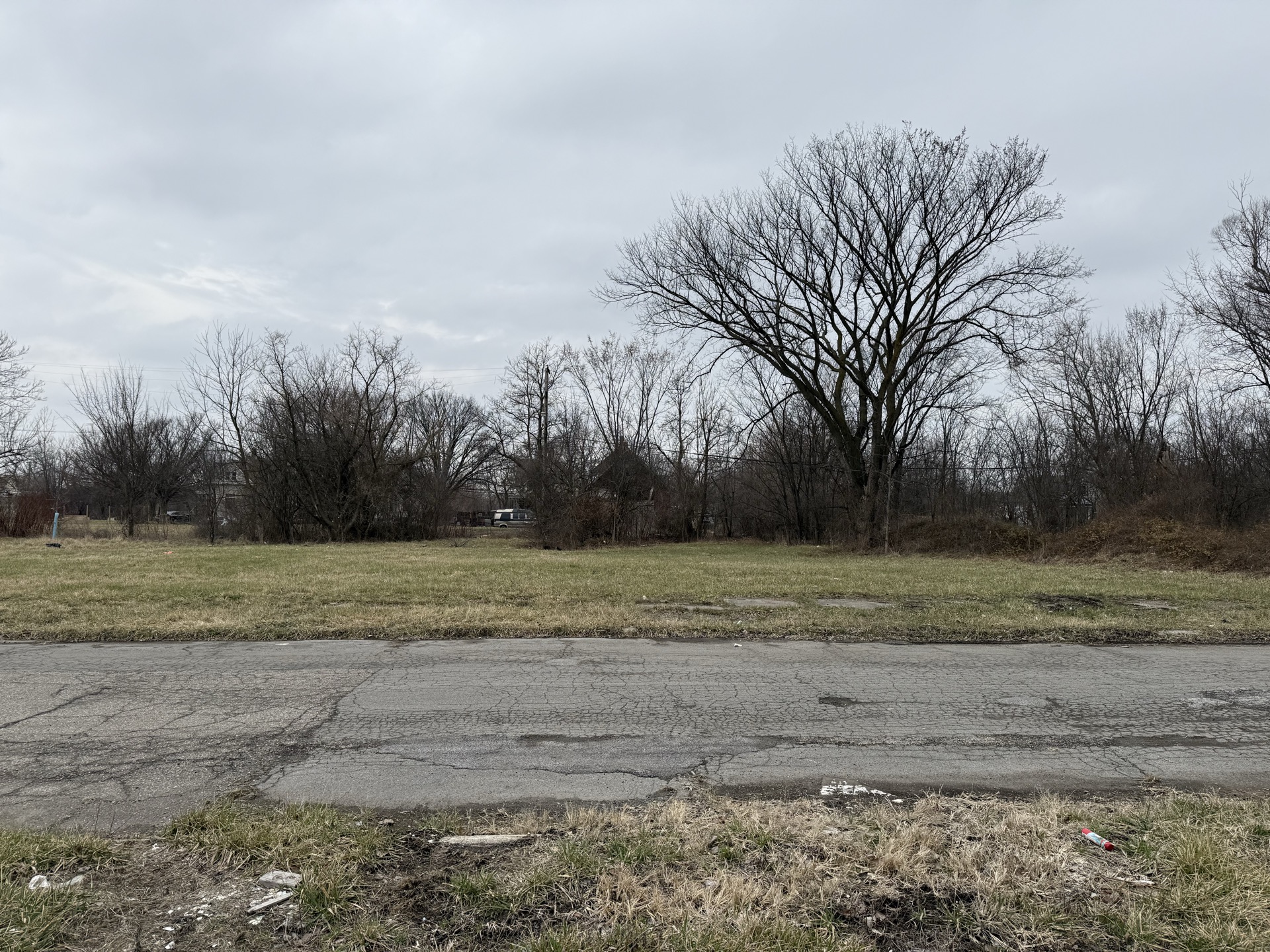
The Land — 9 Lots on 25th Street

Street view of 25th Street lots, Detroit — March 22, 2026

The Land Today

4475–4523 25th Street • Chadsey-Condon • March 22, 2026
Wide view looking north across the vacant lots
Wide shot showing street edge Street-level view showing tree line
9
Parcels
0.68
Acres Total
42.342°N
GPS Coordinates

View on Detroit Parcel ViewerGoogle MapsiNaturalist ProjectTree Equity Score Map

4475 • 4481 • 4487 — 30×110 ft each
4493 • 4501 • 4509 — 30×110 ft each
4513 • 4521 • 4523 — 30×110 ft each
Tree Equity: Detroit has 31% tree canopy (recommended: 40%+). Of 875 block groups, 286 score below 75 on the Tree Equity Score — some as low as 36. The Detroit Tree Equity Partnership is planting 75,000 trees ($30M, 300 jobs). Dryad's 300 saplings on 25th Street contribute directly to closing this canopy gap.

Ecological Context — Restoring a Globally Imperiled Ecosystem

The 25th Street parcels sit on a glacial lakeplain — the ancient bed of glacial Lake Maumee. Government Land Office surveyors (1816–1856) documented this area as a mosaic of oak savanna and tallgrass prairie. Two MNFI natural community types historically present:

Lakeplain Oak Openings

G2/S1

Globally Imperiled / State Critically Imperiled

Fire-dependent oak savanna with 200+ plant species. Bur oak, pin oak, swamp white oak canopy over tallgrass prairie ground layer.

MNFI Community Description →

Lakeplain Wet Prairie

G2/S1

Globally Imperiled / State Critically Imperiled

Species-rich tallgrass prairie on seasonally wet lakeplain. Up to 200 species in a single remnant. Less than 1% survives today.

MNFI Community Description →

Soil: Urban fill (demolition debris, coal ash, slag) over native glacial lakeplain clay. Alkaline pH matches historical soil chemistry. Lead/zinc contamination means no food production — native habitat restoration is the appropriate use. Prairie species are pioneer colonizers of disturbed, low-fertility soils. Wayne State Urban Soils Research →
Rare Species: Kirtland's Snake (Clonophis kirtlandii, state threatened) is specifically known to inhabit urban vacant lots in Detroit. Monarch butterfly (Danaus plexippus, federal candidate) depends on milkweed — our seed mix includes 3 milkweed species. Purple milkweed (state special concern) and prairie fringed orchid (federal threatened) are historical lakeplain wet prairie species that could recolonize restored habitat. MSU Pollinator Initiative →

Restoration Timeline

Year 0 (2026)

Invasive removal + soil test + dormant seeding + 300 saplings

Years 1–2

First-year weedy growth (normal). Mow 2–3× at 6" to favor prairie seedlings over annuals.

Years 2–3

Selective mowing. Prairie grasses reach 1–3 ft. First forb blooms.

Years 3–5

Prairie grasses dominate (4–6 ft). Pollinator activity spikes. Spot invasive removal.

Years 5–10

Mature prairie: 50–100+ species. Oak saplings 8–15 ft. Ecosystem self-sustaining.

Year 10+

Oak savanna structure. Deep root systems (6–15 ft) sequestering carbon long-term.

"Without fire or mowing, lakeplain prairie succeeds to closed-canopy forest within 20–40 years."MNFI. Maintenance is not optional — it's exactly what Dryad automates.

How Dryad Works

Year 0: forestry mastication mulches invasives in place, followed by solarization and dormant seeding. Years 1–2: the autonomous decision loop coordinates maintenance mowing (6", 2x/year) and contractor work to suppress weeds while natives establish. Year 3+: prairie self-sustains with annual mowing as needed. No human bottleneck — discover, plan, hire, verify, pay, record.

1

Community Volunteers Survey

Volunteers use the free iNaturalist app to photograph plants on the lots. AI identifies species, community members verify. Human eyes are essential — a Tree of Heaven looks identical to a native Staghorn Sumac from satellite imagery.

Join the iNaturalist project →

2

Filter to Our Parcels

Dryad queries iNaturalist's API with a GPS bounding box (NW: 42.3422, -83.1006 / SE: 42.3413, -83.0995). Observations outside the parcel boundaries are ignored — invasives 1km away on someone else's land are not our problem.

3

Detect Invasives & Compute Health Score

7 target genera matched at the genus level. Health score (0-100) based on native-to-invasive ratio and species diversity. Venice LLM decides the action: REMOVE_INVASIVES, PREP_SOIL, PLANT_NATIVES, or CONTINUE_MONITORING.

4

Hire Contractor via Email

Dryad sends a detailed work order via AgentMail (dryad@agentmail.to) — scope, location, budget, photo submission instructions, iNaturalist evidence attached.

5

Contractor Submits Proof

GPS-tagged before/after photos uploaded at /Dryad/submit. Three checks: GPS within parcel bounding box, timestamp within work window, image hash untampered.

6

Pay in USDC on Base

$50/tx limit, $200/day limit. Contractors without crypto wallets use Holyheld or Gnosis Pay debit cards to spend USDC directly.

7

Record Milestone Onchain

DryadMilestones.sol records 5 types: SiteAssessment, InvasiveRemoval, SoilPrep, NativePlanting, Monitoring. Every action is permanently verifiable on BaseScan.

The monitoring loop runs every 24 hours. Contractor work is seasonal — 1–2 jobs/year during establishment, tapering to once/year as native prairie matures. Between cycles, the agent auto-buys DIEM to sustain inference and budgets for annual property taxes.

Contractor Communication

Dryad sends and receives email autonomously. Every outgoing message includes a disclaimer identifying it as an AI agent with a human steward contact.

Example: Invasive Removal Work Order
Example: USFWS Native Planting Coordination

Invasive Species — MNFI Threat Assessment

Invasive species are the primary threat to lakeplain oak openings and lakeplain wet prairie restoration. Sources: MNFI, Michigan Invasive Species Program, MISIN.

Priority 1 — Aggressive Woody Invaders

Highest urgency. Dryad hires contractors for removal. Cut-stump glyphosate treatment.

Common Buckthorn

Rhamnus cathartica

Alters soil chemistry, dense shade. MISIN

Glossy Buckthorn

Frangula alnus

Rapid spread in wet soils. MNFI

Autumn Olive

Elaeagnus umbellata

Nitrogen fixer, outcompetes. MI Invasives

Amur Honeysuckle

Lonicera maackii

Outcompetes native understory. MISIN

Multiflora Rose

Rosa multiflora

Dense impenetrable thickets. MI Invasives

Oriental Bittersweet

Celastrus orbiculatus

Strangles and topples trees. MI Invasives

Priority 2 — Aggressive Herbaceous Invaders

Monitor and manage. Triggers alerts in the decision loop.

Common Reed

Phragmites australis subsp. australis

Non-native subspecies. 15 ft monocultures. Note: native subsp. americanus has reddish stems in mixed stands — leave it.

Reed Canary Grass

Phalaris arundinacea

Dominates wet areas, excludes all other species.

Purple Loosestrife

Lythrum salicaria

Destroys wetland habitat. Biocontrol available.

Spotted Knapweed

Centaurea stoebe

Allelopathic, displaces natives on dry sites.

Garlic Mustard

Alliaria petiolata

Disrupts mycorrhizal networks critical to oaks.

Japanese Knotweed

Reynoutria japonica

Near-impossible to eradicate. Multi-year herbicide program.

Priority 3 — Tree of Heaven

Ailanthus altissima

300,000 seeds/year. Releases ailanthone toxin that kills surrounding plants. Aggressive resprouter — requires hack-and-squirt or basal bark herbicide.

Target Native Community

Grasses (60%): Big Bluestem, Little Bluestem, Indian Grass, Switch Grass, Side-oats Grama

Forbs (40%): Butterfly Milkweed, Common Milkweed, Black-eyed Susan, Wild Bergamot, Purple Coneflower, Rough Blazing Star, New England Aster, Mountain Mint, Joe-pye Weed, Golden Alexanders, Culver's Root, Wild Lupine

Trees: Bur Oak, Swamp White Oak, White Oak, Pin Oak, Shagbark Hickory, Eastern Redbud, Serviceberry, Elderberry

Seed: Prairie Moon Nursery | Saplings: Cold Stream Farm | Species list: MSU Southern Lower Peninsula

All invasive species data sourced from Michigan Natural Features Inventory community threat assessments for Lakeplain Oak Openings and Lakeplain Wet Prairie. Michigan Watch List →

Treasury & Self-Sustaining Compute

Hold ETH

Agent wallet on Base receives ETH donations or earns revenue

Stake via Lido

ETH → wstETH at 3.5% APR. Yield accrues automatically.

Spend Only Yield

Principal untouched. Operations funded from staking rewards only.

DIEM — Self-Funded Inference: DIEM token on Base (0xf4d9…a024). 1 DIEM staked = $1/day in Venice.ai credits. Agent buys DIEM via Uniswap on Base.
Crypto Property Tax: Detroit accepts cryptocurrency via PayPal crypto wallet at checkout. No bank account needed — fully onchain tax compliance.
USDC Debit Cards for Contractors: Holyheld (Mastercard, 1% cashback) or Gnosis Pay (Visa, up to 4% rewards). Contractors don't need crypto wallets.

Financial Model

Setup & Operating Costs

One-Time Setup Costs

ItemCost
Land purchase (9 lots via DLBA)$9,000
Forestry mastication & site prep (0.68 acres)$1,500
Prairie Moon seed mix (25+ species, MI ecotype) + 300 saplings (Cold Stream Farm: 80 Bur Oak, 60 Swamp White Oak, 40 White Oak, 30 Pin Oak, 20 Hickory, 30 Redbud, 20 Serviceberry, 20 Elderberry)$2,000
Filing fees (LLC, DLBA, permits)$1,000
Total$13,500

Annual Operating Costs — Years 1–2 (Establishment)

ItemCost
Property taxes (9 × ~$30)$270/yr
DIEM for inference$62/yr
Lot maintenance & contractor work$1,000/yr
Invasive removal, mowing 2–3×/yr at 6", replanting gaps
Hetzner VPS CX22$58/yr
LLC maintenance$50/yr
Base gas fees~$5/yr
Total (Years 1–2)$1,445/yr
If LVT passes$1,778/yr

Year 3+ (Established Prairie)

ItemCost
Property taxes + LLC + DIEM + VPS + gas$445/yr
Lot maintenance (1–2 mows, spot invasive removal)$500/yr
Total (Year 3+)$945/yr
If LVT passes$1,278/yr
LVT Exemption: Under Detroit's proposed Land Value Tax, vacant land millage would increase from 85 to ~189 mills ($30 → $67/lot). However, urban farms, community gardens, and designated community spaces are exempt from the increase (BridgeDetroit). Dryad-managed native habitat restoration lots would qualify.
Self-Sustainability & Treasury Resilience

Self-Sustainability Threshold

At 3.5% stETH APR, the Year 3+ cost of $945/yr needs $27,000 in stETH (~10.4 ETH at $2,600). Setup costs $17K once. The first two years need ~$1,445/yr for active management. By year 3, established prairie drops to $945/yr. Total to bootstrap and sustain forever: ~$47K.

Treasury Resilience — 60/40 Split on $27K

60% stETH ($16.2K) / 40% USDC ($10.8K) on Aave/Morpho (4% APR). USDC portion is immune to ETH price swings.

ScenariostETH YieldUSDC YieldCombinedvs. $945/yr
Current$567$432$999✓ Covered
ETH -30%$397$432$829−$116
ETH -50%$284$432$716−$229

Adaptive spending: NORMAL → CONSERVATION (pause discretionary contractor work) → CRITICAL (steward intervention). Non-negotiable floor: $383/yr (taxes + VPS + gas + LLC).

Even at -50% ETH, yield ($716) covers the non-negotiable floor ($383) with margin. Pause one contractor job and the land self-maintains through prairie resilience.

Cost Comparison, Revenue & Land Acquisition

Cost Per Lot Comparison

ApproachYear 1–2/lotYear 3+/lotEcological Value
City mowing (status quo)$67–170/yr$67–170/yr foreverNone
Dryad restoration~$161/yr~$105/yrFull ecosystem services

Crossover at Year 2–3: Dryad becomes cheaper than mowing while delivering carbon sequestration, pollinator habitat, stormwater management, and biodiversity.

Land Acquisition Path

Land-Based Projects programDLBA Create-a-Project: $250/lot for LLC/501(c)(3). LLC: $50/yr. Must be current on city payments. Neighbor notification required 30 days before site work (≤1 acre). Zoning: detroitdevelopment.org. Contact: LBP@detroitmi.gov.

Community partners: Keep Growing Detroit, Detroit Future City, Greening of Detroit, Michigan Community Resources.

Scaling — Beyond 25th Street

Rust Belt Vacant Land

Detroit 122K+ lots • Flint 10K+ • Cleveland 27K+ • Baltimore 15K+ • St. Louis 10K+ • Gary 6K+ • Camden 3K+

Open source. Each city gets its own Dryad instance adapted to local ecology, invasive threats, and soil conditions.

Beyond Cities

Land trusts, timber companies, solar farms (pollinator habitat under panels), highway departments (rights-of-way), corporate ESG programs. Any landowner managing ecological restoration at scale.

Revenue — Ecological Credits: 0.3–1.7 tons CO2/acre/yr (EPA calculator). At $14/ton (Ecosystem Marketplace): ~$9.50/yr for 0.68 acres. Biodiversity credits via Wallacea Trust: $2.50–$230/credit (avg $27). Meaningful at scale — 100 acres = $1,400/yr carbon + up to $27K/yr biodiversity.

Roadmap

Q2 2026

Pilot on 9 lots. Engage contractors, USFWS partnership, soil sampling, first onchain milestones, iNaturalist project set up + QR signage.

Summer 2026

Forestry mastication of all 9 lots (0.68 acres). Mulch invasives in place, skip hauling. Follow with solarization or light disking to suppress regrowth and prep seedbed.

Fall 2026

Dormant seeding with Michigan-ecotype prairie mix (25+ species). 300 native saplings planted. Host open event during Detroit Month of Design (Sept 2026).

2027-2028

Maintenance mowing at 6" (2x/year) to suppress weeds while prairie establishes. Spring plantings, sapling care. Year 3+: explore prescribed fire with Detroit Fire Marshal.

Future Milestones

Evaluate PropertyDeedNFT.sol for Base mainnet fork. Deploy tokenized deed NFTs for 9 lots.

Launch Snapshot governance (dryadforest.eth). DAO-governed lot acquisitions via DLBA. Geohash stewardship tokens.

Ecological credits registration. Open source agent factory. Expand to Flint, Cleveland, Baltimore. City-specific ecology adaptation.

September 2026: Detroit Month of Design — If funded, Dryad will host an open event at the 25th Street parcels during the citywide design celebration in the first UNESCO City of Design in the US. Walk the lots, photograph species on iNaturalist, see the dashboard live, discuss what autonomous conservation looks like in practice. Application deadline: April 20, 2026. Organized by Design Core Detroit.

V2: Collectively Owned, Agentically Managed

Dryad v1 proves an AI agent can autonomously manage land. V2 asks: what if the land itself was collectively owned onchain — with tokenized property deeds, DAO governance, and no single point of failure? We're building on two models: Autonomous Forest's hybrid legal-DAO framework and a forkable PropertyDeedNFT contract for Base — while learning from RealT's failures in Detroit.

Layer 1: Legal Entity (LLC)

Michigan LLC holds legal title to the land (filed with Wayne County Register of Deeds). Operating agreement encodes that the DAO governs land use decisions. Modeled on Autonomous Forest's Verein structure — legal entity is bound to carry out DAO resolutions. Dissolving the LLC transfers assets to a conservation land trust (failsafe).

Layer 2: Tokenized Property Deeds

Fork of PropertyDeedNFT.sol — ERC721 with ISSUER/NOTARY/ADMIN roles and regulated transfer mode. Each lot = 1 NFT minted by the LLC. Onchain: parcel ID hash + recorded deed hash. Already tested on Base Sepolia. Geohash subdivision possible (~30 grid cells per lot).

Layer 3: DAO Governance

NFT holders stake deed tokens to gain voting rights (staked = non-transferable, like Autonomous Forest). Community Council votes on planting plans, contractor selection, treasury allocation, new acquisitions. Voting on Snapshot (dryadforest.eth). DAO governs WHAT to do. Agent governs HOW.

Layer 4: Autonomous Agent (Dryad)

Already built. Monitors biodiversity, hires contractors, verifies work, pays in USDC, records milestones onchain. Self-funded from stETH yield — no dependency on token sales. Reports to the DAO via onchain milestones and treasury alerts.

The RealT Lesson

RealT tokenized ~1,000 Detroit properties and promised 10% returns to overseas investors. Today they owe Detroit $2M+ in unpaid taxes, face foreclosure on 200+ properties, and have accumulated 1,000+ blight tickets. The City of Detroit has sued them.

Tokenization without operational accountability is worse than no tokenization at all.

Dryad is the opposite model. The agent pays property taxes autonomously from DeFi yield. It maintains the land by hiring contractors and verifying their work. Every action is recorded onchain on DryadMilestones.sol. The DAO provides collective governance. The agent provides operational accountability. Neither exists without the other.

Future Roadmap

PhaseWhat
1Fork PropertyDeedNFT.sol to Base mainnet. Mint 9 deed NFTs. Regulated mode ON (notary = LLC admin).
2Deploy Snapshot space (dryadforest.eth). Staking mechanism for deed NFTs. First community vote on planting plan.
3LLC acquires additional DLBA lots ($250/lot). Mint new deed NFTs. Geohash grid subdivision for stewardship tokens.
4Publish replicable toolkit: LLC template + PropertyDeedNFT fork + Dryad agent config. Other cities fork for their own programs.
5Inter-agent DAO: multiple Dryad agents across cities, governed by local DAOs, sharing contractor networks and ecological data.

Community Stewardship Airdrop

The forest doesn't belong to investors. It belongs to the community that surrounds it.

Dryad V2 introduces a stewardship airdrop — free shares of lot governance distributed to neighbors and active community members. No purchase required. If you live near the land, you have a voice in how it's managed.

Proximity Airdrop — Neighbors First

Residents within 500 feet of any Dryad lot get a free stewardship NFT. Mirrors the DLBA Side Lot program which already prioritizes adjacent homeowners. The city defines "neighbor" at this same radius.

Participation Airdrop — Stewards Earn Shares

10+ verified iNaturalist observations → 1 NFT. Volunteer work day → 1 NFT. Complete a contractor job → 1 NFT. Block club endorsement → NFTs for all members. Proof-of-stewardship, not proof-of-capital.

Soulbound by Default

Stewardship NFTs are non-transferable unless the DAO votes to unlock. Prevents speculation, absentee ownership, and the RealT failure mode. If someone moves, the NFT can be reclaimed by DAO vote and re-airdropped to the new resident.

Equal Governance

1 NFT = 1 vote. No whale dynamics. Simple majority for routine maintenance, 75% supermajority for land use changes (matching Autonomous Forest thresholds). The agent executes community decisions. The community decides based on agent-provided data.

Why this matters: Most crypto land projects sell tokens to fund acquisition. Dryad gives them away to the people who actually live there. This isn't DeFi extracting value from Detroit — it's DeFi returning ownership to Detroit's communities. The agent handles the complexity. The neighbors make the decisions. The land heals.

Legal Note

U.S. property law does not yet recognize NFTs as legal title. Dryad uses a "dual ledger" model: the LLC holds legal title (county records), the NFT represents a membership interest in the LLC (similar to RealT's series LLC but with operational accountability), and the DAO governs via the operating agreement. Over time, as states adopt blockchain-friendly title legislation, the onchain record becomes authoritative. Sources: Oxford Law Blog, Minnesota Journal of Law, SSRN.

Hackathon Themes

Agents That Pay

USDC contractor payments, $50/tx, $200/day, fully auditable onchain.

Agents That Trust

GPS-tagged photo attestations. Agent verifies work directly — no intermediary.

Agents That Cooperate

DryadMilestones.sol, USFWS email coordination, community iNaturalist observations.

Agents That Keep Secrets

DIEM staking = sovereign compute. Encrypted keystore. Venice private inference.

Onchain Artifacts — Base Mainnet

DryadMilestones.sol

0x7572…bc22

5 milestone types, owner-gated, event-emitting

ERC-8004 Identity

Agent #35293

EIP-8004 — Trustless Agents standard

Agent Treasury

dryadforest.eth

ETH, wstETH, USDC, DIEM on Base

Tech Stack

Agent & Onchain

elizaOS v1.7.2 — 8 custom actions
Venice.ai — GLM 4.7 Flash / GLM 4.7
Base L2 — all transactions
DryadMilestones.sol + ERC-8004
viem — EVM wallet (ETH/wstETH/USDC/DIEM)

Data & Infrastructure

iNaturalist API — biodiversity data
AgentMail — dryad@agentmail.to
Hetzner VPS CX22 — Ubuntu 24.04
Node.js 23 + Bun
Uniswap V3 — DIEM swaps on Base

V2 (Planned)

PropertyDeedNFT.sol fork — ERC721 with ISSUER/NOTARY roles, regulated transfers on Base
Snapshot via dryadforest.eth — gasless DAO voting
Michigan LLC with DAO-bound operating agreement

Inspiration: Autonomous Forest (terra0) — hybrid legal-DAO for collective land stewardship
terra0 whitepaper (2016) — the self-owning augmented forest

Michigan Legal Frameworks Worth Exploring

Qualified Conservation Organization

Michigan state designation for tax-exempt conservation groups. Can hold conservation easements (persist in perpetuity). Exempt from income/sales/property taxes. Easement donations qualify for tax deductions. The V2 LLC could partner with or become a QCO for permanent land protection.

Recreational Land Use Statute

Michigan law shields landowners from liability when people use land for recreation (walking, cycling, birding). Directly relevant for Dryad's community access model — visitors can walk the lots, photograph species, attend events without creating liability exposure.